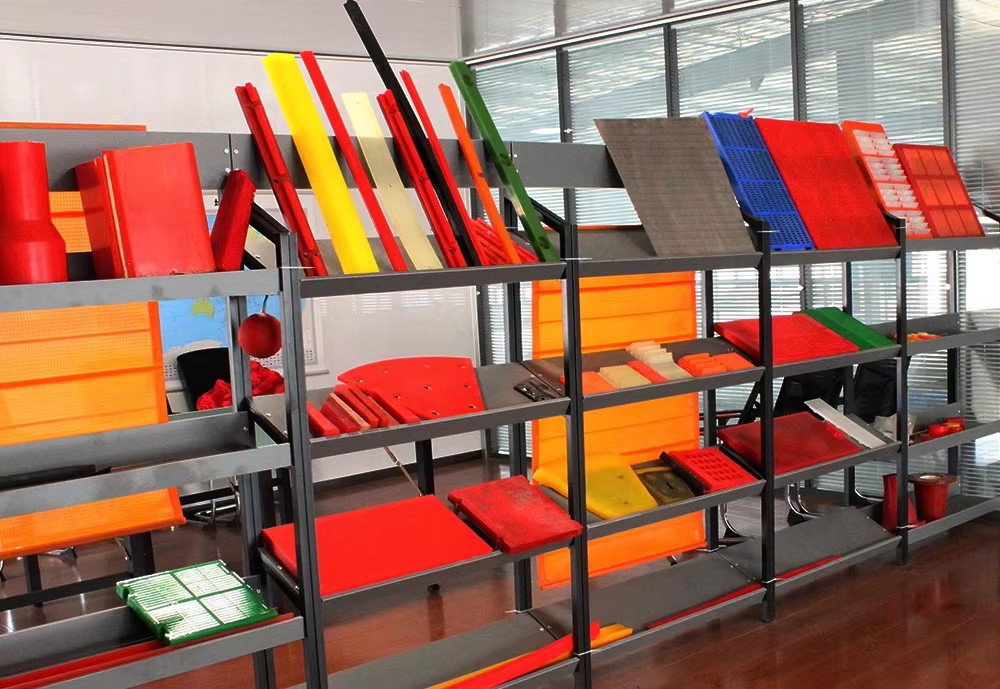
Screen blinding and hole blocking are the most common problems in mineral processing, aggregate production and coal washing operations. Wet materials, fine powder, viscous soil and irregular particle shapes often cause material jamming in screen holes, resulting in reduced screening accuracy, decreased output, frequent shutdown cleaning and increased labor costs. Understanding the causes and targeted solutions to screen blocking is the key to improving screening efficiency.The main reasons for screen blinding include rigid screen hole deformation, poor material elasticity, and static adhesion of fine powder. Traditional steel wire screens and manganese steel screens are hard in texture. Once fine particles are embedded, they cannot fall off automatically, forming permanent blockage. Manual punching and cleaning not only waste time but also easily damage the screen surface, shortening the service life of the screen mesh.At present, the most effective industrial solution to screen blinding is to adopt elastic self-cleaning polyurethane screen panels. The high-elasticity PU screen surface continuously generates micro-vibration during the vibration screening process. Even if fine powder and wet particles enter the screen holes, they will be quickly bounced off, realizing automatic cleaning without manual intervention. This self-cleaning structure can keep the screen open rate above 98% for a long time.Reasonable screen hole design is also crucial to prevent blocking. According to different material particle sizes, we adopt optimized square holes, rectangular holes and tapered hole structures. The tapered hole design with upper narrow and lower wide effectively avoids particle embedding and improves material passing speed. For high-humidity and high-viscosity materials, specially customized anti-blocking PU screens can completely solve the problem of material adhesion.Regular screen maintenance and model matching cannot be ignored either. Selecting screen panels with appropriate wire diameter, aperture and hardness according to material hardness and output can avoid insufficient bearing capacity and screen deformation. Timely cleaning of accumulated dust on the screen surface and checking screen tension can further stabilize screening efficiency.Conclusion: Replacing rigid metal screens with elastic self-cleaning polyurethane screens is the most economical and efficient way to solve screen blinding. It reduces downtime, saves labor costs, and maximizes mine production capacity.